

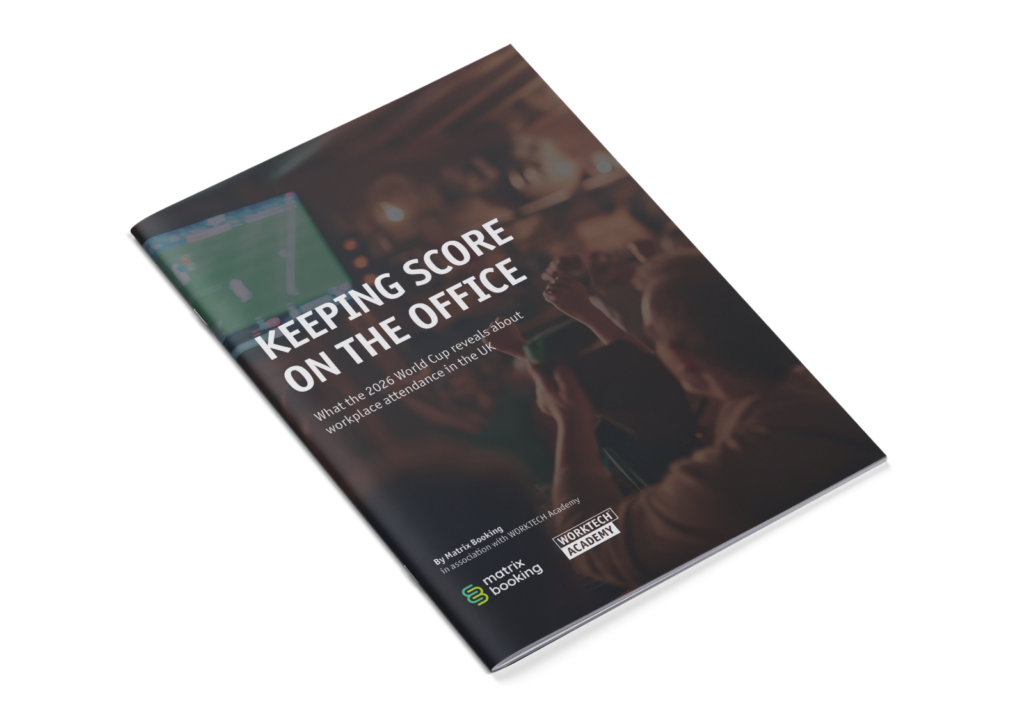
What the 2026 World Cup reveals about hybrid working and workplace attendance
The way people decide when and where to work has changed dramatically in the era of hybrid working. Workplace attendance is no longer driven solely by company policies or return-to-office mandates. Instead, employee expectations, workplace experience and external factors increasingly influence office attendance patterns across organisations.
As the 2026 FIFA World Cup approaches, UK employers face a unique challenge. With many England matches expected to kick off late in the evening due to the tournament’s North American location, organisations are likely to see the effects reflected in workplace attendance, productivity and employee expectations the following day.
While the World Cup is a temporary event, the behaviours it reveals offer valuable insights into the future of workplace attendance, flexible working and employee experience. For workplace leaders, it provides a useful opportunity to understand how cultural moments are shaping the way people engage with work and the office.
Workplace attendance is increasingly influenced by external factors
Hybrid working has normalised the idea that work can adapt to circumstances. Employees already adjust their working patterns in response to factors such as transport disruption, family commitments, weather conditions and wellbeing needs, and major sporting and cultural events are increasingly becoming part of that landscape.
Our latest research, conducted with WORKTECH Academy among 2,000 UK office workers, found that almost six in ten employees expect a late-night England match to have some impact on how they work the following day. While most are not planning dramatic changes, many anticipate making smaller adjustments, whether that means feeling less productive, working from home, starting later or rearranging meetings.
These shifts may appear minor in isolation. However, when multiplied across an organisation, they can have a significant impact on workplace attendance, office space utilisation and overall workplace demand.
The findings suggest that attendance is becoming increasingly dynamic. Rather than being driven solely by policy, employee behaviour is shaped by a range of external influences that organisations have limited control over. In many ways, workplace attendance is starting to resemble a weather system: organisations can forecast patterns, prepare for fluctuations and respond intelligently to changing conditions, but they can’t control every variable. The most successful organisations will be those that recognise these realities and build workplace strategies that can adapt accordingly.
Younger employees are leading changing expectations
The research highlights a notable generational divide in how employees expect to respond to major events. Among workers aged 18–24, almost four in five anticipate that a late-night England match will affect their work the following day, making them significantly more likely than older colleagues to adjust their schedules, work remotely or reorganise meetings. By comparison, half of workers aged 55 and over expect no impact at all.
This reflects a broader shift in workplace expectations. Many younger employees entered the workforce during a period when hybrid working became mainstream and, as a result, often view flexibility not as an employee benefit but as a standard part of modern work.
As newer generations become a larger proportion of the workforce, organisations may find it increasingly difficult to rely on office attendance strategies built around fixed assumptions about where and when work takes place. Instead, there is a growing need to focus on outcomes, collaboration and employee experience, recognising that different groups may engage with the workplace in different ways.
Flexibility has become a cultural signal
One of the strongest messages from our research is the relationship between flexibility and employee sentiment. Almost half of respondents said that flexibility during major sporting or cultural events would make them feel more positive about their employer, while only 2% said it would make them feel less positive.
This finding reflects a broader evolution in how employees perceive workplace flexibility. Increasingly, flexible working is not viewed solely through an operational lens. It has become a signal of trust, understanding and organisational culture.
Whether it’s allowing a later start after a late-night match, providing remote working options or enabling teams to adjust schedules around significant events, these decisions often communicate something larger than the practical policy itself. Employees are looking for organisations that recognise the realities of life beyond work and respond accordingly.
For employers, this presents an opportunity to strengthen employee experience through relatively small adjustments that demonstrate awareness and trust. In many cases, flexibility is no longer simply a question of where people work, but how organisations create a culture that reflects employee expectations while maintaining business performance.
The office still attracts people when it offers an experience
While flexibility remains important, our findings also reinforce another trend shaping workplace attendance. More than two in five employees said they would be more likely to attend the office if their employer was showing World Cup matches on-site, suggesting that people remain willing to make the journey when there is a compelling reason to do so. Among younger workers and those based in London, this figure rises significantly.
This aligns with a wider shift in workplace strategy. Successful workplaces are increasingly focused on creating experiences that can’t easily be replicated remotely. Collaboration, learning, social interaction and shared moments are becoming key drivers of office attendance, complementing the functional role of the workplace.
The office is evolving from a place employees are required to be into a destination they choose to visit because it offers value beyond individual task completion. Major cultural events provide a clear example of this dynamic in action. When organisations create opportunities for people to connect around shared experiences, they strengthen workplace culture and create additional reasons for employees to come together in person.
As organisations continue to refine their hybrid working strategies, the ability to create meaningful workplace experiences may become just as important as the policies that govern attendance.
A useful test for the future of work
The 2026 World Cup will last only a few weeks, but the workplace behaviours it exposes are likely to persist long after the final whistle. In many respects, the tournament acts as a stress test for hybrid working, creating a predictable disruption that reveals how workplace policies, employee expectations and attendance patterns respond when external events influence behaviour at scale.
For workplace leaders, this presents an opportunity to move beyond assumptions and take a more evidence-based approach to workplace planning. By combining workplace analytics, occupancy insights and employee feedback, organisations can gain a clearer understanding of what drives attendance and how workplace experience influences behaviour.
The World Cup may be a sporting event, but it also offers a valuable reminder that workplace attendance is no longer simply about where people work, but why they choose to be there. As cultural moments continue to shape employee behaviour, organisations will need to balance flexibility with purpose, creating workplaces that support productivity while delivering experiences people genuinely value.
At Matrix Booking, we believe the organisations that succeed will be those that use these moments as opportunities to strengthen workplace culture, improve employee experience and create workplaces that people actively choose to attend. The challenge is no longer simply managing workplace attendance – it’s creating workplaces that earn it.
Explore how else Matrix Booking can help you

Employees can search for desks in any of your buildings or shared hubs, find colleagues, make bookings for their team, and more.

People can find rooms that meet their needs, including location, facilities, capacity, and accessibility. Add equipment, catering, and other essentials.

Efficiently manage visitor sign in systems across your sites, ensuring a secure welcome and clear communication of health and safety procedures.

Powerful reports help you keep track of occupancy levels, usage trends, and more, so that you can continually optimise your estates.
Book your demo today
"*" indicates required fields
Matrix Booking uses the information provided to contact you about relevant content, products, and services. You may unsubscribe from these communications at any time. For more information, please read our Privacy Policy.